
Water Boring Project – 2025
- Home
- Water Boring Project – 2025
Water Boring Project – 2025 | Ensuring Access to Clean Water with Dignity
Water Boring Project – 2025
The Water Boring Project – 2025 was implemented by Tooba Foundation to address severe water shortages in underserved and water-stressed communities. Many families, particularly women and children, faced daily hardships in accessing clean water. This project aimed to provide a sustainable, long-term water solution to improve health, hygiene, and quality of life.
Project Objectives
- To provide sustainable access to clean and safe water
- To reduce daily hardship caused by water scarcity
- To improve hygiene and prevent waterborne diseases
- To support healthier and more stable communities
Key Features of the Program
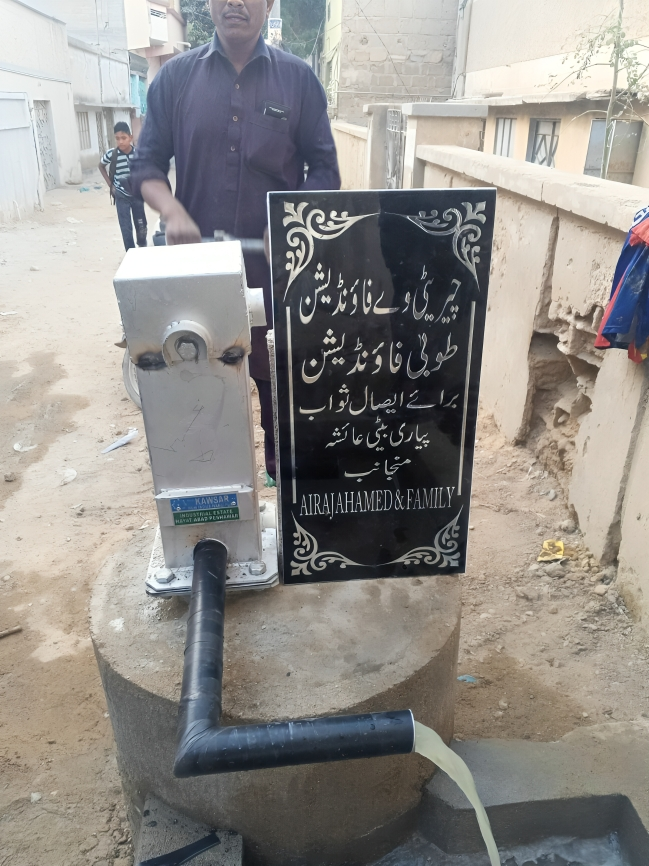
- 5 borewells were successfully installed in underserved areas.
- Approximately 8,000 individuals benefited from reliable access to clean water.
- Borewells were installed in high-need locations after proper assessment.
- Durable equipment was used to ensure long-term functionality.
- Community accessibility was prioritized to maximize shared benefit.
How the Project Works
- Water-scarce areas are identified through community surveys and need assessment.
- Technical feasibility and water table conditions are evaluated.
- Borewell locations are finalized in consultation with local communities.
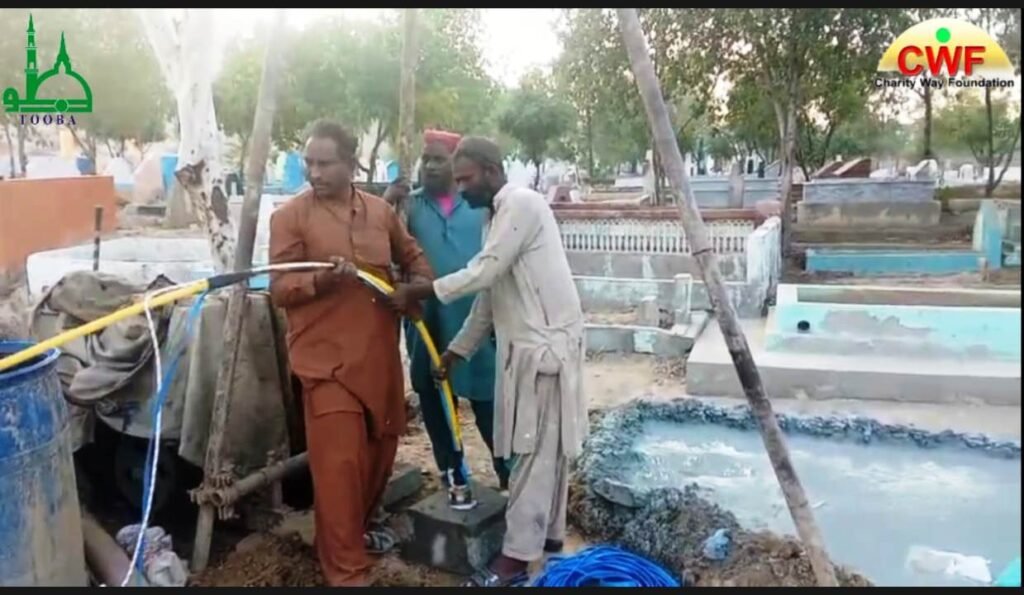
- Professional teams carry out drilling and installation.
- Post-installation checks ensure safe and continuous water supply.
- Community members are guided on basic maintenance and responsible usage.
Impact
The project significantly improved daily access to clean water, reduced time spent fetching water, and eased physical burdens—especially for women and children. Improved water availability led to better hygiene, lower risk of waterborne diseases, and enhanced overall living conditions.
Conclusion
The Water Boring Project – 2025 delivered long-term relief to water-stressed communities. By ensuring sustainable access to clean water, Tooba Foundation contributed to healthier lives, reduced hardship, and improved dignity for thousands of individuals.